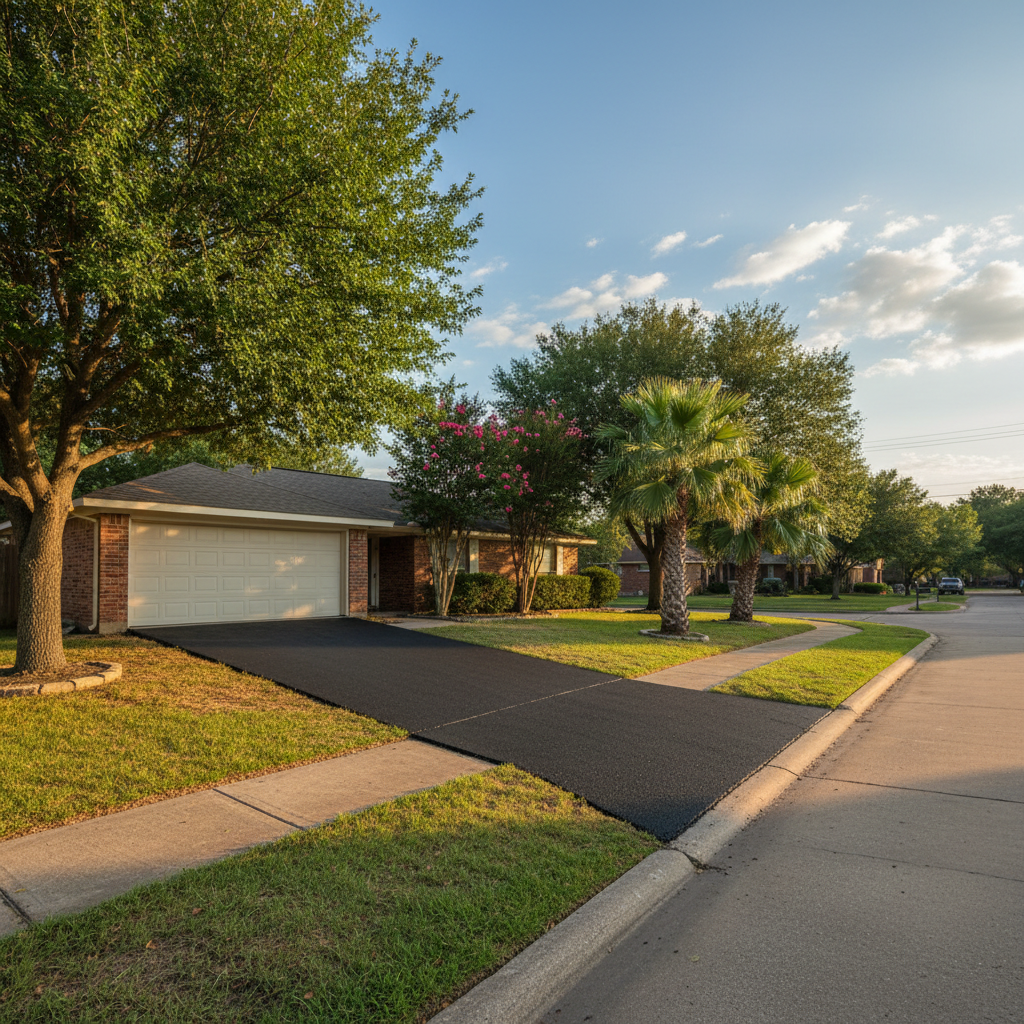
You're probably wondering what it's going to cost to get that new asphalt driveway put in, or maybe fix up the one you've got. It's a fair question, and frankly, a lot of folks in Houston don't really know what goes into the price. I've been doing this for a long time, and I've seen everything from folks getting ripped off to others getting a fantastic deal. Let's talk about what actually affects the price tag and what you should be looking for.
What Drives the Cost of Your Asphalt Driveway?
It's not just about the square footage, though that's a big part of it. There are several key things that move the needle on your final bill. Understanding these will help you make sense of any quote you get.
- Size and Shape: This one's obvious. A bigger driveway means more material and more labor. But the shape matters too. A long, straight driveway is usually more efficient to pave than one with lots of curves, turns, or odd angles. Those intricate shapes take more time and skill to get right, and that costs more.
- Existing Conditions & Prep Work: This is probably the biggest variable. If you've got an old, cracked-up concrete driveway that needs to be completely removed, hauled away, and then the subgrade prepped, that's a lot more work than just paving over an existing, solid gravel base. If the ground is soft or poorly drained – which we see a lot of in Houston with our clay soils and heavy rains – we might need to do extra grading, add more base material, or even install some drainage solutions. That's not cheap, but it's critical for a driveway that lasts.
- Asphalt Thickness: Most residential driveways are laid with 2 to 3 inches of compacted asphalt. Thicker asphalt uses more material and takes more effort to compact properly, so it costs more. If you've got heavy vehicles, like an RV or a big truck, you might want to consider 3 inches or even more, but for most cars and light trucks, 2-2.5 inches is usually fine.
- Type of Asphalt Mix: Believe it or not, there are different asphalt mixes out there. Some are designed for heavy traffic, others for specific weather conditions. For residential work, we typically use a standard hot-mix asphalt that's durable and cost-effective for our climate here in Houston.
- Accessibility: Can we easily get our big paving equipment, dump trucks, and rollers onto your property? If it's a tight squeeze or we have to haul materials a long distance from where the trucks can park, that adds time and labor.
Typical Cost Ranges for Residential Asphalt in Houston
Alright, let's get down to some numbers. I hate when contractors just say